

Every property manager has a version of this story: the clubhouse party that wasn't booked by a resident, the game room controller that walked off, the pool gate propped open at 1am. Misuse is rarely dramatic. It is a slow leak of damage, cost, and resident trust. The properties that keep shared spaces working do not rely on signs and hope. They layer access, accountability, and enforcement so misuse is hard to start and easy to trace.
Why this is worth solving properly
Residents rank this higher than most operators assume. In RentCafe's 2025 renter survey (5,471 respondents), 62% named safety and security a must-have, statistically tied with in-unit laundry at the top of the list, and 53% said clean, well-kept common areas make a real difference in where they rent. A trashed amenity is both problems at once: it reads as unsafe and uncared for.
The industry is moving accordingly. Parks Associates reported in April 2025 that 72% of multifamily owners and operators plan smart building upgrades, with access control specifically leading, on at least one property within twelve months. In its earlier survey of 300 MDU owners and managers, 62% of those planning access control deployments cited resident and staff expectations as the driver, and tested smart building deployments produced 15 to 20% average savings. Access control has crossed from differentiator to expectation, on both sides of the leasing desk.
Most misuse is an access problem first
Unpack the incidents and a pattern shows up: the majority trace back to people being somewhere they should not be, at a time they should not be there. Non-residents borrowing the gym through a propped door. Amenities used at 2am because the same fob that opens the lobby opens everything, always. A physical key that has been copied an unknown number of times.
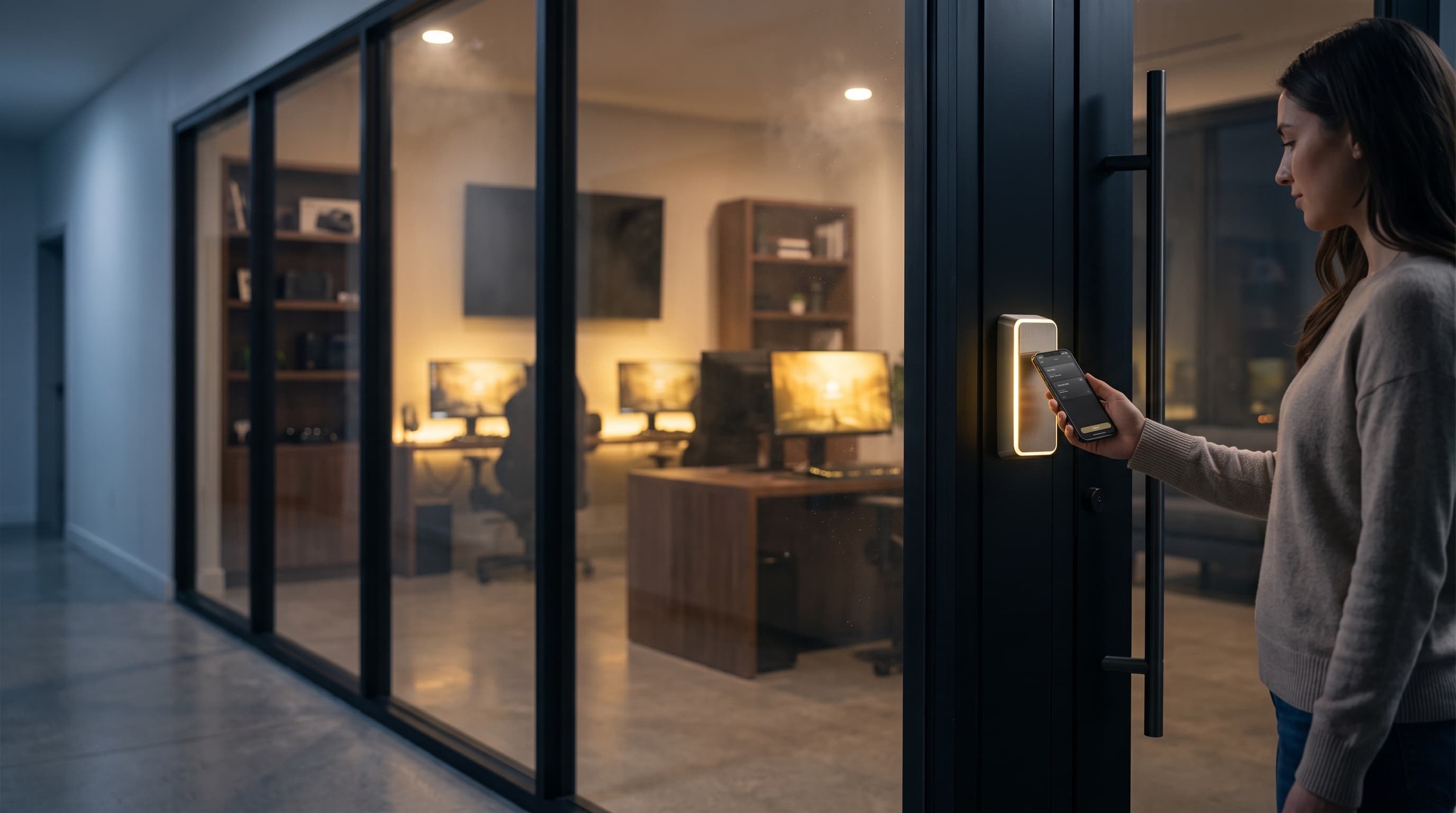
Per-amenity, schedule-aware credentials close most of this on their own. Modern systems issue time-limited QR codes, PINs, or mobile credentials scoped to a specific room and booking window, and log every entry. When a door knows who opened it and when, two things happen: casual misuse stops because anonymity is gone, and real incidents become a lookup instead of an argument. The NMHC/Grace Hill renter preferences data shows residents are already there: as summarized by Swiftlane, 67% of renters were interested in or would not rent without keyless smart locks.
Booking systems turn rules into defaults
The second layer is making the compliant path the easy path. Amenity booking platforms now bundle the enforcement mechanics that used to depend on a manager's memory: reservations tied to the resident's account, usage caps per household, guest limits stated in the confirmation, credentials that expire when the slot ends, and no-show penalties that escalate from a warning to a temporary booking hold.
This shifts enforcement from confrontation to configuration. Nobody has to police the clubhouse on Saturday night if the room only unlocks for the household that booked it and relocks when the window closes. Rules that live in software get enforced every time, and rules that live on a laminated sign get enforced when someone is willing to have an awkward conversation. One legal note worth taking seriously: enforcement must be consistent to stay on the right side of fair housing obligations, which is itself an argument for automated, uniformly applied policies over case-by-case judgment calls.
High-value rooms deserve an operations layer, not just a lock
For amenities with real equipment in them (gaming lounges, sim rooms, media rooms), access control alone is necessary but not sufficient. The strongest deterrent we see in practice is a space that is actively operated: usage tracked per session, equipment checked on a schedule, problems fixed fast, and a steady calendar of events that keeps legitimate use high.
Occupied, cared-for rooms police themselves; neglected rooms advertise that nobody is watching. A broken controller left broken for a month tells residents the space is unmanaged, and unmanaged spaces attract the behavior that matches. This is the same ownership principle from our piece on common problems with apartment gaming rooms: a named owner for the room prevents more damage than a camera does.
What to do with this
Rank your amenities by replacement cost and incident history, then work down the list with three questions. Can this room be entered by someone without a scoped, logged credential? Can it be used outside a booking or posted hours without anyone knowing? If something is damaged, would you find out from a log or from a complaint? Every "yes, anonymous" answer is where the next incident is already scheduled. Fix access first, put bookings and caps in software second, and give the expensive rooms an owner. Misuse thrives on anonymity and idle space, and a well-run amenity offers neither.