

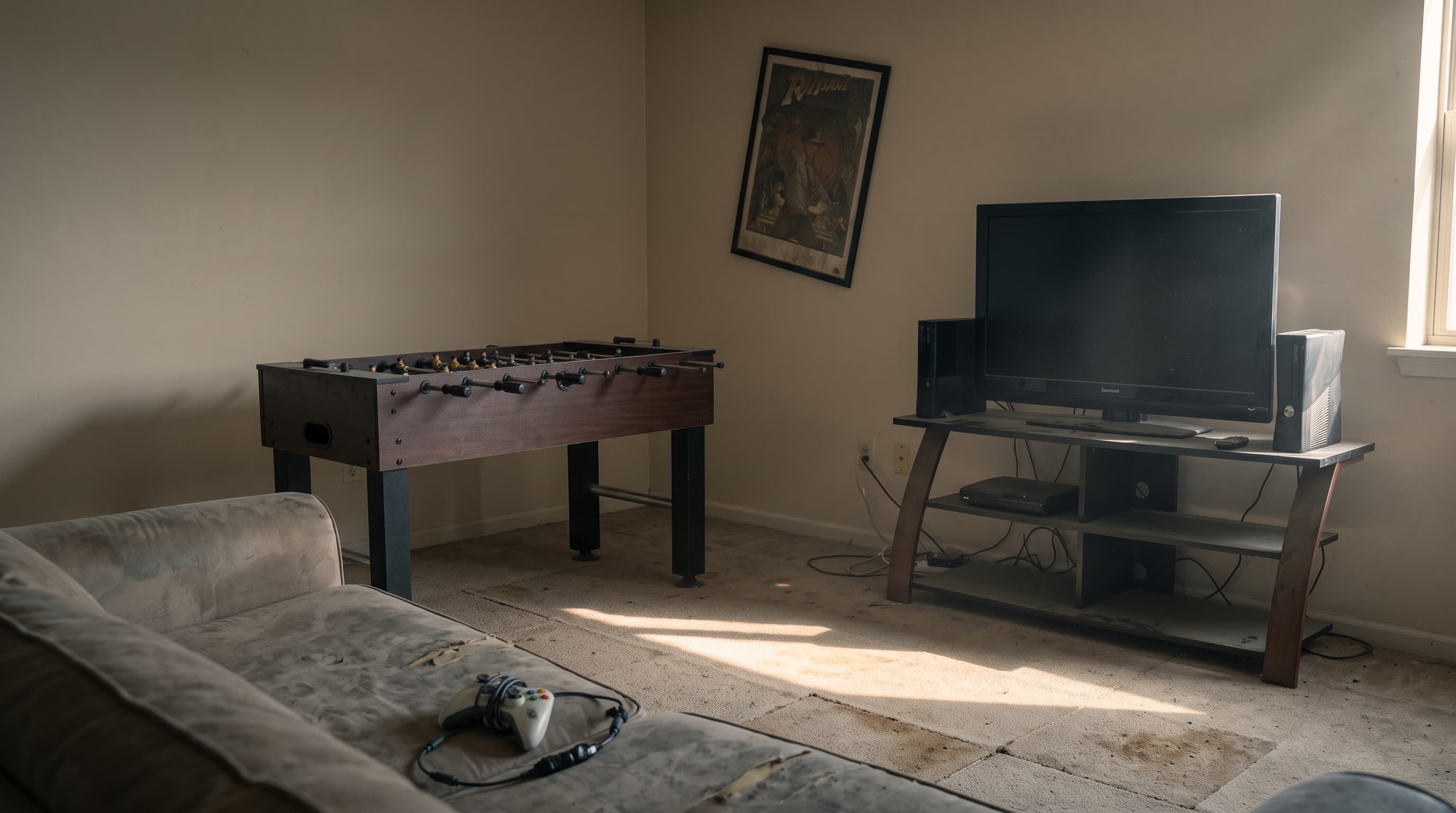
I have walked into a lot of apartment game rooms, and most of them tell the same story: a decent budget spent once, three to five years ago, on a room nobody has touched since. The gaming room is the amenity with the widest gap between what it could do for a property and what the typical install actually delivers, and the failure modes are consistent enough to list.
The room that photographs well and sits empty
The multifamily industry has a documented gap between amenity interest and amenity usage. The classic example comes from the NMHC/Kingsley resident preferences data, where 84% of surveyed residents said they were interested in or would not rent without an on-site fitness center, yet roughly half rarely or never use it. Entertainment rooms sit further down the usage table: in WithMe's 2023 survey of multifamily professionals, the most-used amenities were fitness centers, coffee bars, outdoor areas, printers, and package lockers. Game rooms did not make the list.
"Flashy" entertainment amenities "often go underutilized," WithMe founder Jonathan Treble told Forbes in 2024. And an empty room is not free: elevateOS estimates a 2,000 square foot clubhouse-type space carries $400 to $1,000 per month in utilities and upkeep whether anyone uses it or not. An unused game room is not a neutral asset. It is a recurring bill attached to a room that quietly tells prospects the property does not follow through.
The five failure modes we see repeatedly
Nearly every dead game room fails in one or more of these ways:
- Equipment aged out. Consoles and PCs date faster than any furniture in the building. A five-year-old setup is visibly obsolete to the residents it was built for, and nothing signals "we don't actually care about this" like a console two generations old. The room was funded as capex once, with no refresh line.
- Nobody owns it. Fitness centers get a service contract. Pools get a vendor. Game rooms usually get nobody: no one updates game libraries, replaces a dead controller, or notices the second monitor stopped working in March. Maintenance requirements for gaming spaces (network standards, peripheral replacement cycles, thermal load) sit outside what a typical facilities team is staffed to handle.
- The network was an afterthought. Consumer-grade Wi-Fi shared with the leasing office cannot carry six simultaneous players. Residents try it once, get lag, and never come back. First impressions in gaming are unforgiving.
- Designed as decor, not for play. The DIY pattern of pool table plus arcade cabinet plus projector plus bar produces cramped rooms with bad sightlines and tangled cords. It reads as a rec-room collage rather than a place designed around how people actually play together: clusters, spectating space, and clear zones.
- Zero programming. A room with no calendar depends entirely on residents self-organizing. Some buildings get lucky. Most get a room that is empty on the tour and empty at renewal. Amenity churn follows: Multifamily Dive documented operators like RMK Management converting underused theater rooms into game rooms, and unmanaged game rooms become the next conversion candidate a few years later.
What the fixed version looks like
None of these are room problems. They are operating problems, which is good news because operations can be bought, budgeted, and measured. The fixed version has a refresh budget for hardware, a named owner for the space, a network built for concurrent play, a layout designed around groups and spectators, and a recurring event calendar that gives residents a first reason to walk in.
The difference between a dead room and a booked one is rarely the initial spend. It is whether anyone is responsible for the room in month eighteen. We watched this play out at Wolverine Crossing, where a managed gaming facility (maintained hardware, curated library, programmed events) became the property's most-booked amenity within two months and pulled 30% of a 1,000-resident building through the door in its first 60 days. Same category of amenity that fails everywhere else. The variable was the operations layer.
What to do with this
If your property already has a game room, audit it against the five failure modes before spending anything: equipment age, ownership, network, layout, programming. Fix ownership first, because every other fix decays without it. If you are considering adding one, budget it like an operating amenity rather than a furniture purchase: the install is the down payment, and the refresh cycle, network, and programming are the actual product. A game room run that way competes for most-used amenity in the building. Run the other way, it becomes the next room an operator quietly converts into storage.