

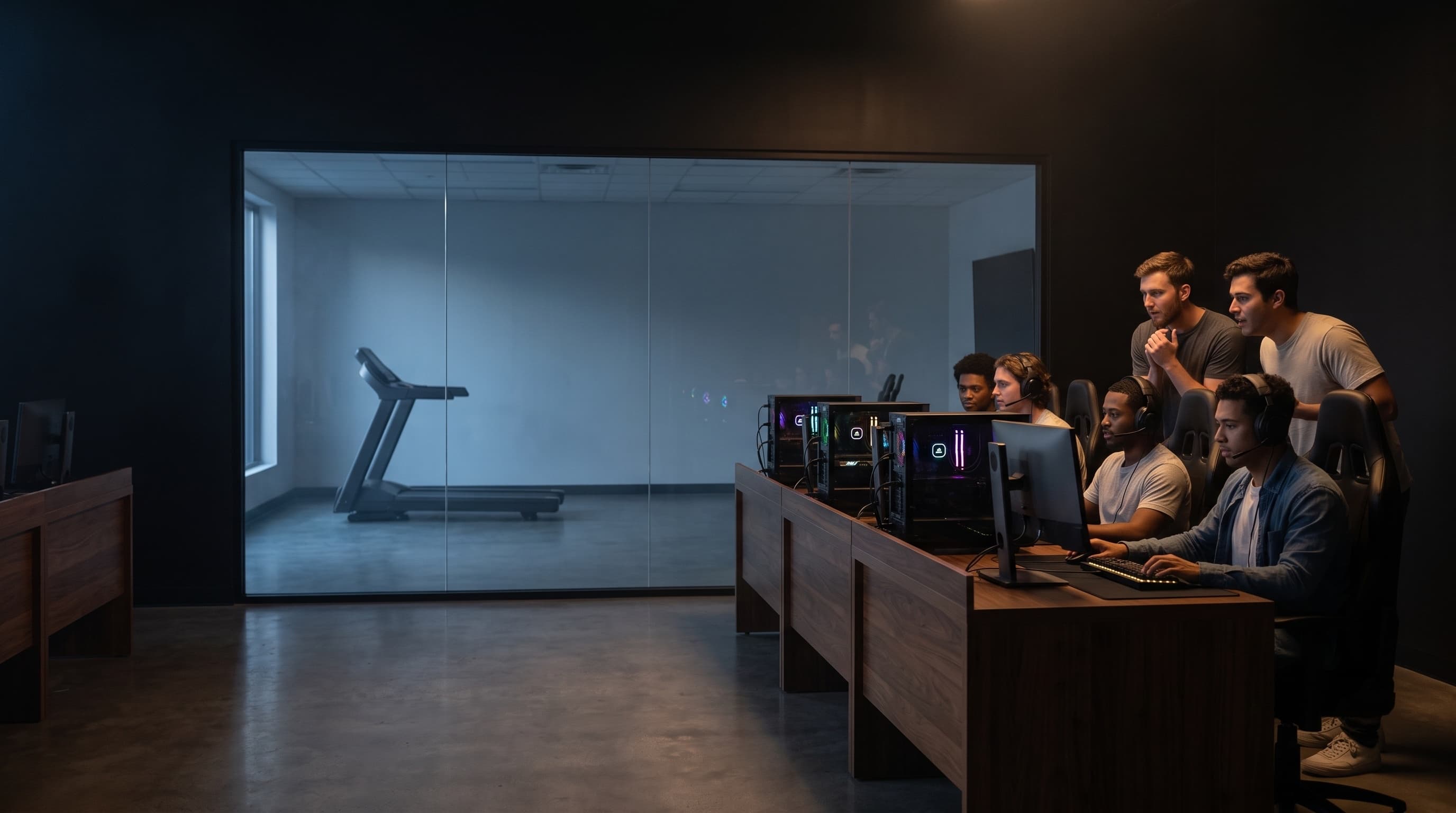
The gym and the pool are the two most standardized amenities in multifamily, and they are also two of the least used relative to what they cost. The properties pulling ahead on renewals are not the ones with the biggest fitness center. They are the ones with spaces residents visit repeatedly, together, on ordinary weeknights.
The usage numbers behind the standard stack
Start with the fitness center. According to the NMHC/Grace Hill 2024 Renter Preferences Survey (172,000+ renters), 93% of surveyed renters have an on-site workout facility, but only 7% use it daily and 24% use it a few times a week. Among residents who do not use the gym at all, 32% said they simply have no interest in a community workout space, and another 19% already work out somewhere else.
The pool follows the same pattern with a wider gap between stated interest and commitment. The same NMHC survey found 76% of renters expressed interest in a swimming pool, but only 23% consider one essential. Interest is cheap on a survey. Essential is what shows up in a lease decision.
A majority of renters will now trade the standard stack away outright. The Rently 2025 Smart Apartment Trends Report found 58% of renters would give up pools and gyms in exchange for lower rent and better smart home features. When more than half your residents would swap an amenity for a rent discount, that amenity is not differentiating the property. It is baseline cost.
And the cost side is not small. We broke down the operating math in what a pool actually costs: routine maintenance runs $10,000 to $20,000 per year, and the all-in annual on a heated commercial pool has been documented above $100,000.
Where renter demand is actually moving
The same surveys that show gym and pool softness show experiential and social space rising. Renter interest in shared and coworking spaces jumped from 35% to 48% between editions of the NMHC/Grace Hill survey, one of the largest gains of any amenity category. On the recreation side, Apartments.com reports that listings featuring a pickleball court have increased more than sevenfold since 2021, with more than one in five renters interested.
The common thread is not the specific activity. Renters are shifting value toward amenities that are social by design: spaces where the point is doing something with other people, not standing next to equipment alone. A treadmill is a solo obligation. A game night, a pickleball match, or a tournament bracket is a plan with other residents.
The renewal math is social
This is where the business case gets concrete. Resident retention data published by Apartment Life shows renters who know no one in their community renew at 29%, while renters who know seven or more neighbors renew at 47%. Even a single friend in the building raises renewal odds by roughly 10 points.
Amenities that manufacture social connection are, functionally, renewal infrastructure. A gym does not introduce residents to each other. An experiential space, programmed well, does it every week. That 18-point renewal spread is worth more to NOI than almost any rent premium an amenity can command on a tour.
What we measured when they ran head to head
We had the chance to watch this play out directly at Wolverine Crossing, a 1,000-resident student housing property in Provo that installed an LK gaming facility alongside its existing pool. Over the same 60-day window, the gaming facility logged 49% more visits than the pool at 30% of the install cost, which works out to 5× more visits per capital dollar. Thirty percent of the entire building came through at least once in the first 60 days, and renewals moved 24 points.
Same building, same residents, same two months. The experiential amenity produced five times the engagement per dollar of the traditional one. The general manager's line in that case study is the tell: it became the most-booked space in the building, and the only one residents mention at renewal.
What to do with this
None of this argues for demolishing pools or gyms. It argues for how the next amenity dollar gets allocated. Before approving the next fitness center refresh or pool overhaul, pull actual usage data on both, then compare it against what a space-equivalent experiential amenity would cost to install and operate. Underwrite on visits per dollar and renewal lift, not on what the tour brochure has looked like for the last decade. The properties that have run that comparison honestly are spending less on the standard stack and getting more back from spaces residents actually build habits around.