

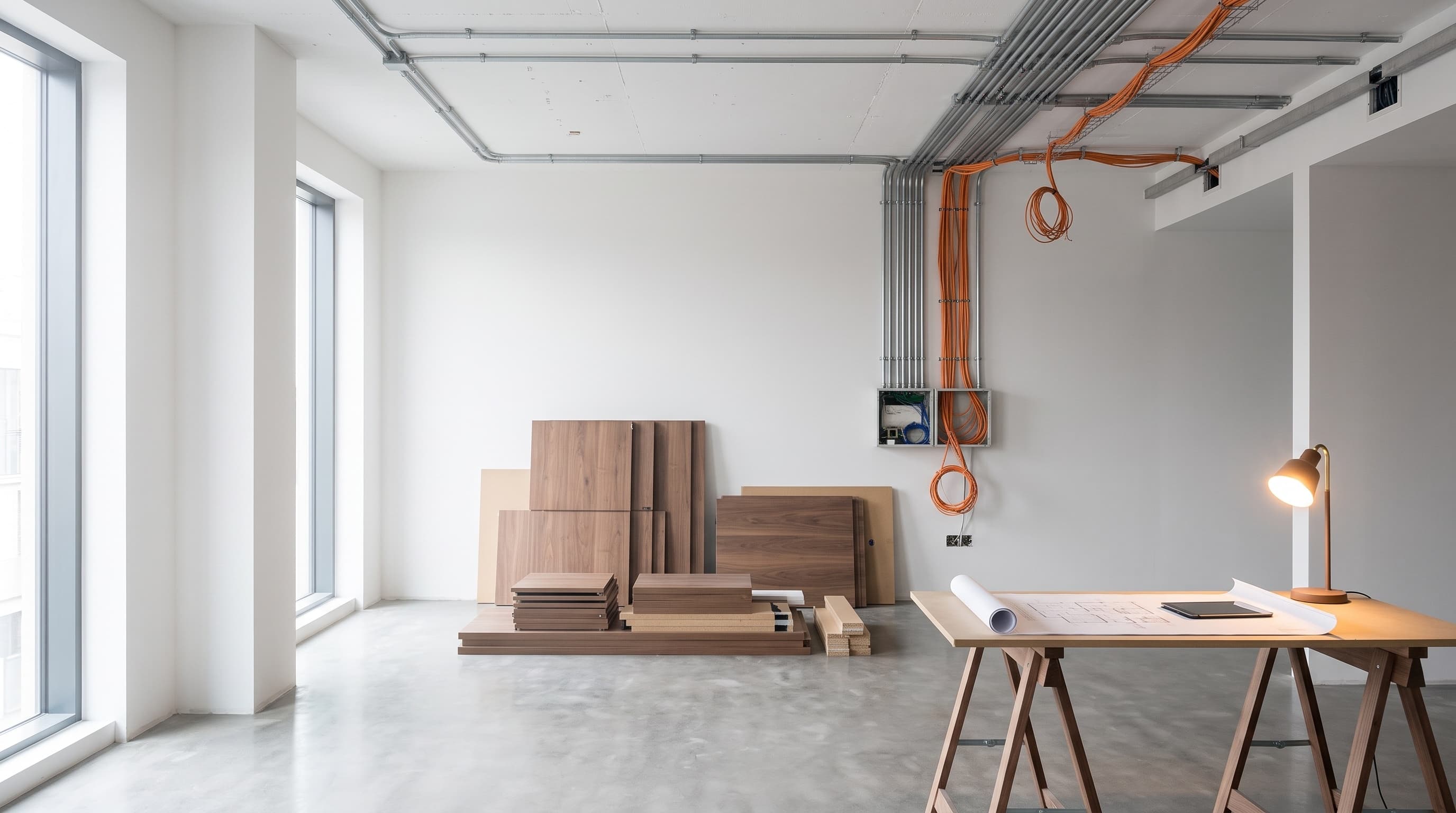
Every amenity on your rent roll has a shelf life, and the shelf is getting shorter. The business center went from leasing-brochure staple to measurable liability in roughly a decade: Zillow's 2024 analysis of 5.6 million listings found properties advertising one now get 24% fewer saves, while coworking spaces get 16% more. Future-proofing is not about guessing the next hot amenity. It is about building spaces whose purpose can change without a construction project.
Amenity preferences move faster than capex cycles
The uncomfortable math is that amenity fashion now turns over faster than the 10 to 15 year horizon most owners use to amortize an amenity build. Preferences are not just shifting between amenities but away from entire categories: the Rently 2025 Smart Apartment Trends Report found 58% of renters would trade pools and gyms for lower rent and better smart home technology, and 54% now expect smart locks, thermostats, and cameras as standard.
Even within a single amenity, the equipment ages out mid-lease-cycle. NMHC/Grace Hill data reported by Multifamily Dive showed Peloton preference among fitness-focused renters falling from 50% to 28% between the 2022 and 2024 surveys. If a specific piece of equipment can lose half its appeal in two years, no amenity plan built around specific equipment is future-proof. Industry design outlooks from NAIOP and JLL have converged on the same response: adaptable, reconfigurable space, because requirements now shift within months rather than years.
Infrastructure is the part worth over-building
The one layer that does not go out of style is connectivity and power. The NMHC/Grace Hill 2024 survey found 86% of renters rate high-speed internet as very important or absolutely essential, and it ranks among the few amenities renters actively say they will pay for.
The cost asymmetry here is the single most actionable number in amenity planning. According to Leios Consulting's new-construction guidance, pre-wiring smart and low-voltage infrastructure during construction runs roughly $3,000 to $8,000, while retrofitting the same infrastructure after drywall runs $10,000 to $25,000 or more, because every cable run becomes cutting, patching, and repainting. Access control retrofits show the same shape: Swiftlane puts retrofit intercom and access projects at $6,000 to $40,000 per entrance.
Conduit, power density, and network capacity cost the least at exactly the moment most projects value-engineer them out. And the infrastructure layer can carry its own return: Gatewise reports managed community Wi-Fi typically yields $50 to $79 per unit per month in recurring revenue. Over-build the bones. They are the cheapest insurance in the building.
Separate the shell from the program
The practical discipline is to treat every amenity as two investments with two different lifespans:
| Layer | Lifespan | Examples | Design rule |
|---|---|---|---|
| Shell | 20+ years | Power, conduit, network, HVAC, acoustics | Over-spec now, never touch again |
| Program | 2–5 years | Equipment, furniture, software, theming | Modular, swappable, budgeted to refresh |
A business center built this way would have converted to coworking, or a gaming lounge, or a content studio for a fraction of what most conversions cost, because the expensive layer was already right. A future-proof amenity is one where changing what the room is for costs furniture money, not construction money. This matters more every year that construction costs climb; CBRE's Construction Cost Index has labor and materials up 20 to 30% since 2021.
The corollary: be suspicious of any amenity whose value is welded to the architecture. A pool is all shell and no swap. A purpose-built spa is a bet that one specific preference holds for twenty years. The amenities that age best are rooms with great bones and replaceable contents.
Plan the refresh before the install
The last piece is operational. A future-proofed space still decays if nobody owns its second act. Write the refresh into the pro forma at install time: a program-layer budget line every three to five years, a named owner for utilization data, and a trigger (visits per week, booking rates) that tells you when the current program has peaked. Managed amenity models bundle this in; DIY models need it written down, or the refresh becomes a deferred-maintenance argument in year six.
What to do with this
On the next amenity decision, new build or renovation, split the budget sheet into shell and program before comparing options. Push spend toward power, network, and acoustics; pull spend out of anything welded to one specific use; and fund the program refresh from day one. The goal is not to predict what residents want in 2032. It is to make sure that whatever they want, the answer is a swap, not a demolition.