

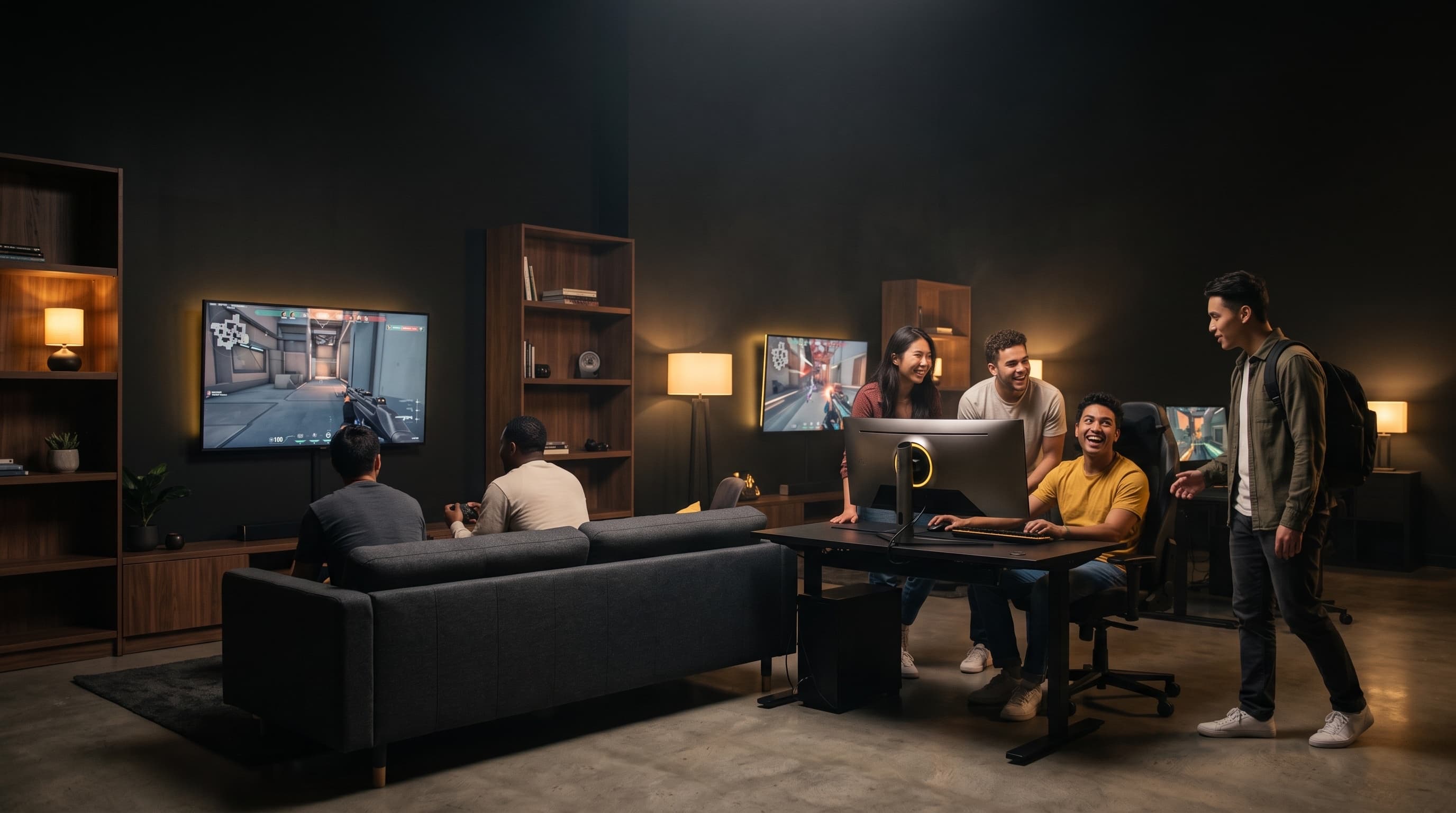
Gen Z is not the next renter demographic to plan for. They are the current one. According to RentCafe's 2025 analysis, Gen Z now heads 10.4 million renter households, 23% of all U.S. renters, after adding 6.7 million renter households between 2019 and 2024. Designing amenities for this generation is less about adding features and more about designing the conditions for people to actually meet each other.
Start with how they socialize, not what they own
The most useful design input is not an amenity wishlist. It is how this generation builds friendships. The Entertainment Software Association's 2025 Essential Facts report found that 89% of Gen Z believe video games can introduce them to new friends, 70% have met people through gaming they would not otherwise know, and 63% have met a good friend or a significant other through games.
Read those numbers as a designer and the conclusion is hard to avoid. For a large share of your youngest residents, gaming is not entertainment squeezed between social time. It is the social time. A community that gives that behavior a physical home is building the room where its residents' friendships will actually form. A community that doesn't is asking those friendships to happen somewhere else, in someone else's building.
This is the piece the standard amenity checklist misses. A space can be beautiful, well-lit, and fully furnished and still generate zero introductions. The design question that matters is: what happens in this room that requires another person?
Connectivity is the foundation, not a feature
Before any social layer works, the infrastructure has to be invisible and flawless. Apartments.com's Q2 2025 renter survey, where Gen Z was the largest cohort at 27% of 20,000 respondents, found high-speed internet, digital leasing tools, and modern tech among their top priorities, and noted that a property without fast Wi-Fi can be an outright dealbreaker. In RentCafe's 2025 survey, fast internet ranked among Gen Z's top in-unit needs alongside in-unit laundry.
For Gen Z, internet quality is not an amenity to advertise. It is the utility they judge everything else by. An amenity space with weak Wi-Fi reads the way a pool with cloudy water reads to their parents. In shared spaces this means wired connections where performance matters, real bandwidth planning for peak evening hours, and someone accountable when it degrades.
Design for the group, price for the individual
Gen Z is the most cost-conscious cohort in the market. RentCafe's 2025 survey (5,471 respondents) found rent price is a non-negotiable for 20% of Gen Z, and their must-have lists lean practical: parking, laundry, storage. That is not a contradiction with the social findings. It is the design brief.
They will not pay a premium for a long list of amenities they use alone, but they will choose and keep a lease at a building where their friends are. So the winning design pattern is fewer, better shared spaces built around group activity: seating in clusters rather than rows, equipment that supports five people playing or watching together, rooms that can host a tournament on Friday and a quiet co-op session on Tuesday. Every design choice should make it slightly easier to be around other people without forcing it.
A few practical moves we have seen work in real installs:
- Sightlines matter. People join what they can see. A gaming space behind a solid door stays empty; one visible from the mail room fills up.
- Spectating is a feature. Half of participation is watching first. Leave room to stand behind the players.
- Programming beats square footage. A modest room with a weekly event out-engages a large room with none.
What to do with this
If your resident base is trending younger, walk your amenity floor and ask one question per room: does anything here require or even encourage two residents to interact? Count the rooms where the honest answer is no. That count, more than any feature comparison against the property across the street, is the gap between your community and the one Gen Z renews in. Close it with spaces built around shared activity, bulletproof connectivity, and a calendar that gives people a reason to show up the first time. They will handle the second time themselves.